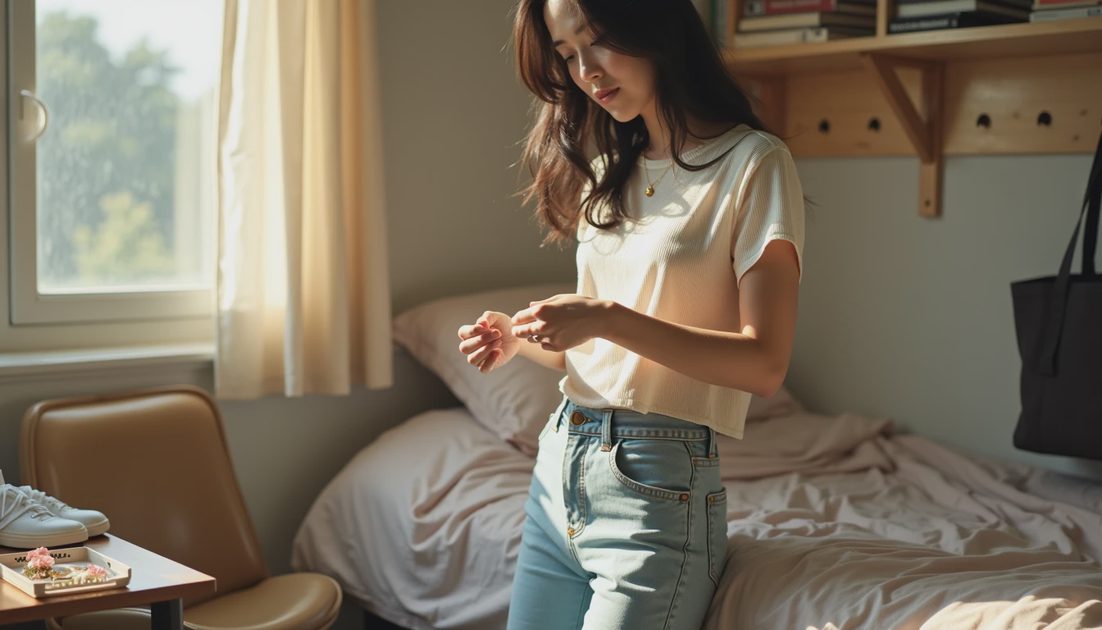
There's a specific kind of outfit I'm always trying to achieve. The one that looks like I just threw it on, but in a good way. The one where someone might say "you look cute" and I can honestly answer "thanks, I barely thought about it" — even though I did think about it, just not in an obvious way.
The difference between a casual outfit that looks intentional and one that looks like you gave up is rarely the clothes themselves. It's the details. The tiny, almost invisible choices that signal to anyone looking that you put in some effort, even if it was only thirty seconds' worth. Here are the styling details I've learned to pay attention to.
Silhouette Balance
The overall shape of an outfit is the first thing people notice, even if they don't realize it. A balanced silhouette makes an outfit look considered. An unbalanced one makes it look accidental.
The simplest way to check your silhouette is to look at the relationship between your top and bottom. If your top is fitted, let your bottom be wider — straight-leg jeans, wide-leg trousers, a flowy skirt. If your top is oversized or voluminous, let your bottom be slimmer — straight or slim-cut pants, a fitted skirt. The contrast creates visual interest and makes it clear that you thought about the whole outfit rather than grabbing two random pieces.
Volume distribution matters throughout the entire body, not just top versus bottom. A puffy sleeve paired with a relaxed wide-leg pant can feel like too much volume everywhere. A fitted sleeve with that same wide-leg pant creates balance. The goal isn't to hide or minimize anything — it's to create a shape where the eye moves naturally through the outfit without getting stuck.
The waist is the natural point of definition in most outfits, even if you're not wearing anything tight or belted. A loose tuck, a slightly cropped top hitting at the waistband, or an open layer creating vertical lines through the middle all help define where your waist is without constricting it. Outfits that completely hide the waistline can sometimes look shapeless, unless that oversized-all-over look is very intentional.
Sleeve, Tuck, and Hem Adjustments
These are the micro-adjustments I make to almost every outfit I wear. They take seconds, cost nothing, and reliably make basics look more styled.
Sleeve adjustments change the energy of a top instantly. Long sleeves pushed up to just below the elbow expose the forearm, which is subtly slimming and adds a relaxed, "I'm doing things" vibe. A crisp double roll on a button-down sleeve looks more intentional than a messy push. For short sleeves, a tiny roll at the hem — just one small fold — can make a basic tee sleeve look more finished. These adjustments also help with fit; sleeves that are slightly too long suddenly look like they were designed to be worn pushed up.
Tucks are the fastest way to define a shape. A full tuck reads as polished and clean. A French tuck — just the front section loosely tucked — reads as effortlessly styled. A side tuck or a twisted tuck can add a little asymmetry that feels intentional. The key is choosing the tuck that matches the vibe. A stiff, perfect tuck with a casual tee can look like you're trying too hard. A messy, undone tuck with a blouse can look sloppy. Match the tuck to the fabric and the occasion.
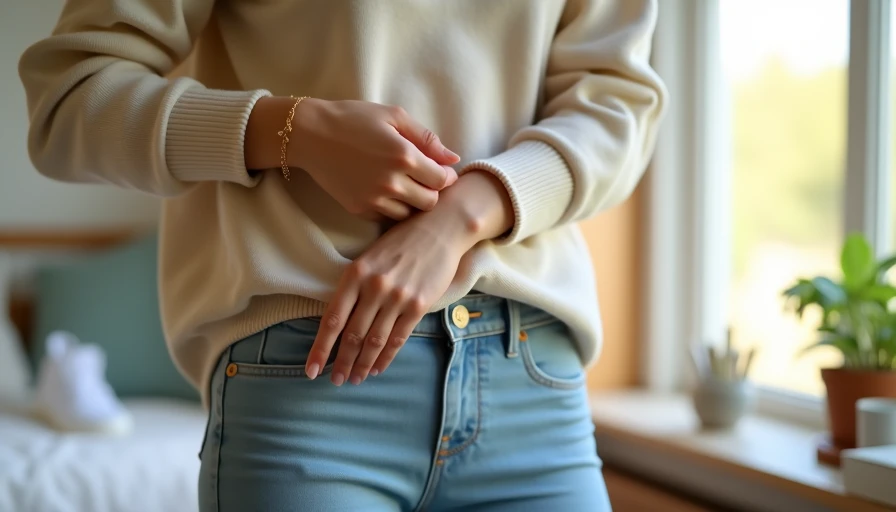
Hem adjustments apply to pants, skirts, and even sleeves. A clean cuff on jeans shows the ankle and creates a neat endpoint for the eye. It also works practically — jeans that are slightly too long suddenly fit perfectly with one or two rolls. The cuff itself can be a styling detail: a wider cuff reads more casual, a narrow crisp cuff reads more polished. For skirts and dresses, the hem hitting at a flattering point — usually just below the knee, mid-calf, or just above the ankle — looks more intentional than an awkward in-between length.
Color Coordination
Color coordination isn't about matching perfectly. It's about creating a palette where every color feels like it belongs.
Stick to a consistent color temperature. Warm tones together — cream, beige, warm blush, camel — create a cohesive look. Cool tones together — stark white, cool gray, icy blue, lavender — do the same. Mixing warm and cool tones unintentionally can create subtle visual friction that makes an outfit feel slightly off. This doesn't mean you can never mix temperatures, but doing it on purpose looks different from doing it by accident.
Limit your palette to two or three colors. An outfit with too many different colors can feel busy and unplanned, even if all the pieces are nice on their own. A cream top, light-wash jeans, and a beige cardigan is three colors that all live in the same neutral world — it looks cohesive. A cream top, olive pants, a pink bag, and blue shoes starts to feel scattered. The more pieces in an outfit, the fewer colors I try to use.
Use a single accent color against neutrals. If my whole outfit is cream and beige, a small touch of soft blue — a hair ribbon, a bag, a cardigan — adds interest without disrupting the calm. The accent becomes a focal point, and the neutrals support it quietly. This is one of the easiest ways to make an outfit feel styled without overcomplicating it.
Bag and Shoe Harmony
Bags and shoes have an outsized visual impact because they're often the only accessories in a casual outfit. When they work together, the outfit feels complete. When they clash, the whole thing can feel disjointed.
Match the formality level of your shoes and bag. If I'm wearing clean white sneakers, a canvas tote or a casual crossbody makes sense. If I'm wearing loafers or ballet flats, a slightly more structured bag matches the energy. Mixing very casual shoes with a very formal bag, or the reverse, can feel unintentional — like you grabbed two things from different lives without checking if they made sense together.
Coordinate metals and hardware. This is a tiny detail, but I notice it every time. If my bag has gold-tone hardware, I wear gold-tone jewelry. If it has silver-tone hardware, I switch to silver. When the metals match, the outfit feels quietly cohesive. When they don't, it's not a disaster — most people won't notice — but there's a subtle friction that affects how polished the whole look feels.
Keep both in good condition. I've said this before, but it bears repeating. A beautiful outfit with scuffed shoes or a stained bag will always look less intentional than a simple outfit with clean, well-maintained accessories. Condition communicates care. Care communicates intention.
Jewelry and Hair Finishing Touches
Jewelry and hair are the final layer of detail. They're the things people notice last, but they're often what separates an outfit that looks "fine" from one that looks "put together."
Jewelry frames the face and hands — the most expressive parts of the body. A thin necklace at the collarbone draws the eye upward. Small earrings frame the jaw. A delicate ring or bracelet adds a point of interest at the wrist or hand. None of these need to be expensive or elaborate. The presence of any jewelry at all signals that you finished getting dressed.
Consistency in your everyday jewelry creates a signature. I wear the same tiny gold hoops and thin chain necklace almost every day. They've become part of my look, so even when my outfit is the simplest thing in the world — a tee and jeans — there's still a baseline of polish. Finding your version of this — whether it's gold hoops, pearl studs, a charm necklace, a simple watch — means you always have at least one detail done.
Hair signals effort more than almost anything else. You don't need a complicated hairstyle. A neat low ponytail. A half-up style with a small clip. Soft waves instead of unbrushed hair. A satin ribbon tied simply. Any of these communicates that you took a moment on yourself. The actual style matters less than the fact that it looks intentional — not messy because you ran out of time, but simple because you chose simple.
Common Styling Mistakes
I've made every one of these mistakes, repeatedly. They're the things that can quietly undermine an otherwise good outfit.
Overdoing it. Too many details at once — big earrings, a statement necklace, a printed scarf, a bold bag, colorful shoes — can make an outfit feel cluttered rather than intentional. The goal with details is enhancement, not decoration. When in doubt, take one thing off before you leave.
Under-doing it. The opposite mistake is skipping details entirely. No jewelry, unstyled hair, shoes that are falling apart, bag that's overstuffed and misshapen. A lack of any finishing touches can make even great clothes look like an afterthought. If you do nothing else, put on one piece of jewelry and run a brush through your hair.
Focusing on the wrong things. New clothes get all the attention, but the details that make outfits look intentional are usually free or almost free. A sleeve roll. A tuck adjustment. Clean shoes. A hair clip. Spending energy on these instead of on shopping for more things yields better outfits at no cost.
Matching too perfectly. Matching your bag to your shoes to your belt in the exact same shade can look dated and over-styled. Coordination is better than matching. Colors that complement each other, metals that are in the same family, styles that share a similar energy — these create harmony without looking like you bought everything as a set.
Closing Takeaway
The gap between a casual outfit that looks accidental and one that looks intentional is usually very small. A roll of the sleeve. A tuck at the waist. A ribbon in the hair. Clean shoes. One piece of jewelry. None of these things take more than a minute, and none of them cost anything extra.
The secret to looking put-together isn't having more clothes. It's paying attention to the details that are already in front of you.
Pretty should still feel easy. And sometimes the smallest details make the biggest difference.
No notes yet — write the first one.